

There is no magic button hidden inside the vaginal wall. That might sound like bad news, but it’s actually the most liberating thing you can learn about internal pleasure.
The term “G-spot” has dominated sex education for decades, framing internal sensitivity as a single, coin-sized target waiting to be found. For most people, that framing creates more frustration than satisfaction. According to research published in The Journal of Sexual Medicine, the G-spot is not a distinct anatomical organ at all — it’s an extension of the internal clitoral network, specifically the clitoral bulbs that wrap around the vaginal canal.
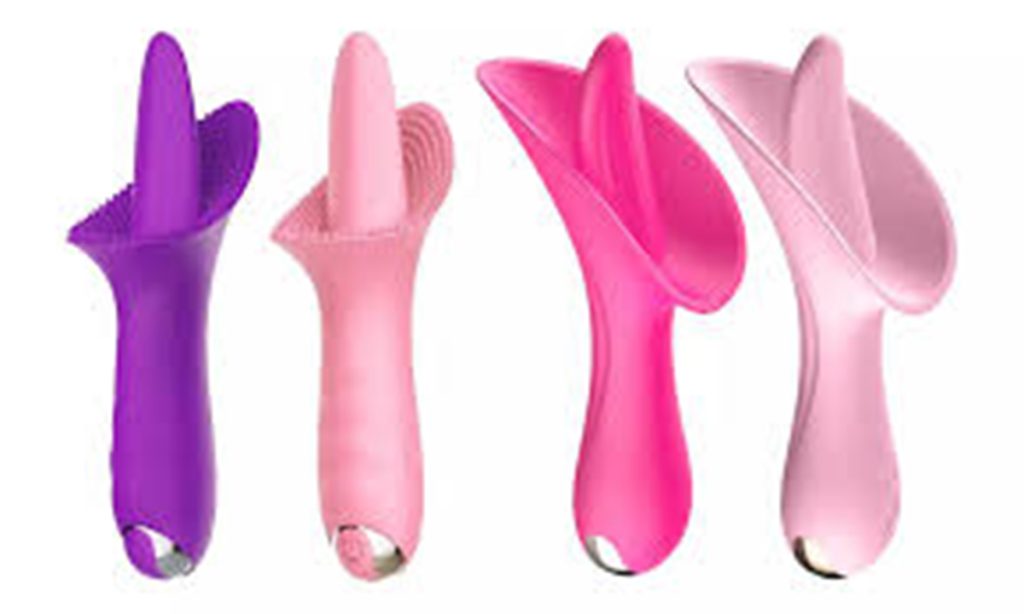
Anatomical fact: The same structure you stimulate externally continues internally, branching into bulbs, roots, and crura that surround the vaginal walls on multiple sides.
This reframes everything. Rather than hunting for a spot, the goal is stimulating a network. The Skene’s glands — sometimes called the female prostate — sit nearby and contribute significantly to internal sensitivity and fluid response, adding another layer to this complex system.
Understanding this is the foundation for better G-spot stimulation techniques for beginners and experienced users alike. A well-angled vibrator wand isn’t chasing a myth — it’s engaging an intricate, mappable internal anatomy.
Which raises an obvious question: if the target is a network, not a spot, why does the angle of your toy matter so much? The answer lives in the specific geometry of the anterior vaginal wall.
Anatomy of an Angle: Why Curvature is Non-Negotiable
Understanding where sensitive tissue lives changes everything about how you approach it. As the previous section established, internal pleasure isn’t a single pinpoint — it’s a region. And reaching that region effectively comes down to basic physics.
The anterior vaginal wall sits in remarkably close proximity to both the urethra and the internal roots of the clitoris. This overlapping neighborhood of nerve-dense tissue is precisely why pressure and angle matter far more than depth or intensity alone. As research into the clitourethrovaginal complex confirms, stimulation works best when it addresses this entire interconnected structure rather than chasing a single mythologized point.
This is exactly why anatomically curved vibrators for internal pleasure have become the standard recommendation among pelvic health practitioners. A well-designed C-shape or upward arc naturally follows the contour of the anterior wall, bridging the gap between external clitoral nerves and their deeper internal branches without requiring awkward repositioning.
Diagram-style breakdown:
- 0°–15° (straight): Primarily contacts the posterior wall — misses anterior nerve clusters entirely
- 30°–45° (gentle arc): Aligns with the anterior wall and underlying clitoral roots
- 60°+ (sharp curve): Can create pressure but may bypass the urethra-adjacent zone
As Dr. Laurie Mintz notes via Psychology Today, sensitivity in this region “varies significantly based on arousal level and the angle of penetration” — meaning geometry isn’t just helpful, it’s functionally necessary.
Best Angle Takeaway: A 30 to 45-degree upward curve consistently delivers the most reliable anterior wall contact for the majority of users.
Straight wands, however well-powered, tend to direct stimulation toward the posterior wall — essentially the wrong neighborhood entirely. The curve isn’t aesthetic. It’s architecture. That understanding sets the stage for examining what kind of motion best activates these nerve pathways once you’ve found the right angle.
Beyond Vibration: The Rise of Flapping and Telescopic Tech
Now that the anatomy is clear — sensitive internal tissue sitting along the anterior vaginal wall, requiring precise angle and sustained pressure — the logical next question is: does your current toy actually deliver that? For most standard vibrators, the honest answer is no.
Why the Skene’s Glands Prefer Rhythmic Stroking
Vibration is a blunt instrument. It radiates outward uniformly, which works brilliantly for the external clitoris but struggles to match what the internal tissue actually responds to. According to the International Society for Sexual Medicine, rhythmic “come-hither” or flapping motions are measurably more effective at stimulating the Skene’s glands than steady vibration alone. The glands are embedded in spongy erectile tissue — they respond to directional pressure, not just buzz.
The ‘Come-Hither’ Simulation: How Flapping Technology Works
Flapping technology replicates the stroking motion of a curved finger, systematically targeting the anterior wall with each cycle. This is the motion anyone exploring how to find the G-spot with a vibrator instinctively attempts manually — and now hardware can replicate it consistently. The mechanical stroke delivers repeatable, angled contact that simple vibration physically cannot.
Telescopic Rotation: Reaching Deeper Nerve Endings
Telescopic rotation takes this further by adding a thrusting, corkscrewing motion that engages deeper nerve clusters — endings that a stationary toy, regardless of its angle, simply never contacts. Static pressure on the anterior wall is a starting point; dynamic movement transforms that contact into something far more complete.
Dual Stimulation: The 81.6% Reality
The most important design insight is this: according to the Journal of Sex & Marital Therapy, only approximately 18.4% of women reach orgasm through internal stimulation alone. The remaining 81.6% require concurrent clitoral engagement. That’s not a limitation — it’s a design requirement. Technology that combines flapping internal mechanics with simultaneous external stimulation isn’t a bonus feature; it’s the baseline.
| Feature | Standard Vibration | Flapping/Telescopic Tech |
|---|---|---|
| Motion type | Uniform radial buzz | Directional rhythmic stroke |
| Anterior wall contact | Incidental | Targeted |
| Deep nerve engagement | Minimal | Active |
| Clitoral pairing | Separate | Integrated |
Understanding what the right tools do is only half the equation — knowing how to use them is where results actually happen.
How to Use a G-Spot Vibrator: A Beginner’s Masterclass
Knowing the anatomy is one thing. Translating that knowledge into real, repeatable pleasure is another. As covered earlier, the internal clitoral complex sits along the anterior vaginal wall — but tissue depth, angle, and arousal state all determine whether stimulation lands or misses entirely. Here’s how to stack every variable in your favor.
1. Build arousal before anything enters. This step is non-negotiable. Internal tissue only becomes reliably responsive once it’s engorged with blood. Think of arousal as the “on switch” for sensitivity — rushing past this phase is the single most common reason internal stimulation feels underwhelming. Spend at least 10–15 minutes on foreplay, external clitoral stimulation, or erotic focus before introducing any device internally.
2. Practice the Slow Entry technique. Ease the toy in gradually, pausing at the vaginal opening. This warms up muscular tension, signals safety to the nervous system, and allows natural lubrication to distribute fully. Rushing creates resistance; patience creates receptivity.
3. Navigate to your personal ‘North Star.’ Once inside, angle the toy’s curved head toward the belly button — not straight back. As Ubie Health notes, “the glans gets all the glory… but there’s a lot more to the internal secret of G-spot orgasms.” Every body is slightly different, so small positional adjustments matter. Move in short rocking motions rather than in-and-out thrusting to maintain consistent anterior wall contact.
4. Introduce movement and pressure incrementally. Start on the lowest setting. Let sensation build before increasing intensity. The ergonomic G-spot massager benefits — curved shaft, angled head, targeted pressure points — only fully pay off when tissue is already aroused and relaxed.
📺 Video Resource: The #1 Spot She Secretly Wishes You’d Focus On — A practical visual walkthrough of internal anatomy and technique.
💡 Pro Tip for Partners
If you’re using a curved vibrator on a partner, position matters more than power. Hold the device steady with gentle upward pressure rather than thrusting. Watch for breath changes and involuntary hip movement — those are reliable signals that you’ve found the right zone. Ask for verbal feedback, and resist the urge to switch angles the moment something starts working.
If all of this raises questions — about individual anatomy, whether certain responses are “normal,” or how to maintain your device — the next section addresses those directly.
Common Questions About Internal Pleasure (FAQ)
Even with a solid grasp of technique and anatomy, practical questions still come up. Here are honest, clear answers to the ones that matter most.
Can everyone find their G-spot? Anatomical variation is real. Research published in BMC Women’s Health confirms that the clitourethrovaginal complex differs meaningfully from person to person — in size, depth, and sensitivity. Some people locate the area easily; others require more exploration or a different approach. That’s normal, not a failure.
Does a G-spot orgasm require squirting? Absolutely not. Squirting and orgasm are two separate physiological responses that sometimes — but far from always — occur together. According to research reviewed by Ubie Health, most people who experience internal orgasms do not squirt. Treating ejaculation as a benchmark sets an unrealistic and unnecessary standard.
What if I don’t feel anything at first?Pleasure is a skill built through repetition, not a switch that flips on demand. Arousal level, stress, and even hydration affect tissue sensitivity. In practice, starting with external clitoral stimulation before introducing internal contact significantly increases responsiveness. Give it multiple sessions before drawing conclusions.
What is the best angle for G-spot stimulation, and how do I maintain it? A forward-curving angle — roughly 30 to 45 degrees toward the belly button — consistently targets the anterior vaginal wall most effectively. High-tech vibrators with articulating or telescopic heads help maintain that angle without physical strain, which is one reason mechanical design matters as much as the settings you choose.
How do I clean a high-tech rotating vibrator? Always check manufacturer guidelines first. Most medical-grade silicone toys can be wiped with a 10% isopropyl alcohol solution or mild unscented soap and warm water. Avoid submerging devices with charging ports unless they’re rated fully waterproof. Proper care protects both the motor mechanism and your health.
Choosing the right tool — and knowing how to use and maintain it — sets the foundation for the kind of intentional, informed experience the next section explores in full.
The Future of Intimacy: Choosing Your Next Experience
Understanding the science behind internal clitoral stimulation changes everything — because pleasure informed by anatomy is pleasure with purpose. Throughout this article, one principle keeps surfacing: mechanical motion, precise angles, and curved, targeted pressure consistently outperform static vibration alone. The internal clitoris responds to movement, not just sensation, which is exactly why intentional design matters so much.
Investing in medical-grade, multi-functional adult toys isn’t indulgent — it’s practical. Whether you’re exploring g spot vibrators, vibrators for women, adult toys for men, or gender-neutral options, the technology behind quality devices supports real anatomical goals. Flexible motors, ergonomic curves, and variable intensity settings aren’t marketing language. They’re engineering solutions built around how the body actually works.
Perhaps most importantly: pleasure is a skill, not an event. It deepens with exploration, patience, and the right tools. Every experience builds toward better understanding.
Ready to explore what’s possible? Browse Idollri’s Latest Items and find the innovation that fits your journey.
Key Takeaways
- 0°–15° (straight): Primarily contacts the posterior wall — misses anterior nerve clusters entirely
- 30°–45° (gentle arc): Aligns with the anterior wall and underlying clitoral roots
- 60°+ (sharp curve): Can create pressure but may bypass the urethra-adjacent zone
- anatomically curved vibrators for internal pleasure
- “come-hither” or flapping motions


