

Fear of being heard is one of the most underrated obstacles to sexual pleasure — and it’s far more common than most people admit.
Nearly half of young adults in shared living situations are quietly managing this exact problem. According to research linked to The Journal of Sex Research, approximately 46% of young adults in shared housing report “noise anxiety” around their sexual wellness routines. That number isn’t surprising to anyone who has ever frozen mid-moment because a roommate walked through the front door.
Noise anxiety, in this context, is the persistent, low-grade dread of being discovered during a private moment — and it does real physiological damage to the experience. When the brain perceives a social threat, it triggers a fight-or-flight response: cortisol spikes, muscles tense, and the body’s arousal systems actively shut down. Pleasure and panic cannot coexist. What should be a relaxing, restorative experience becomes a hypervigilant exercise in listening for footsteps.
Modern housing makes this worse. Apartment walls — especially in newer builds and college dormitories — are frequently constructed with single-layer drywall over metal studs, a combination that transmits sound with brutal efficiency. A device humming at 55 decibels in a bedroom can be clearly audible in an adjacent room, sometimes even through a closed door. The search for the quietest vibrators for shared apartments isn’t a niche preference; it’s a practical necessity for millions of people trying to reclaim private space in very public living situations.
This is the key reframe: silence is not a luxury feature — it is a core engineering specification. Understanding what actually makes a device loud or quiet starts with understanding sound itself, and one number sits at the center of that conversation.
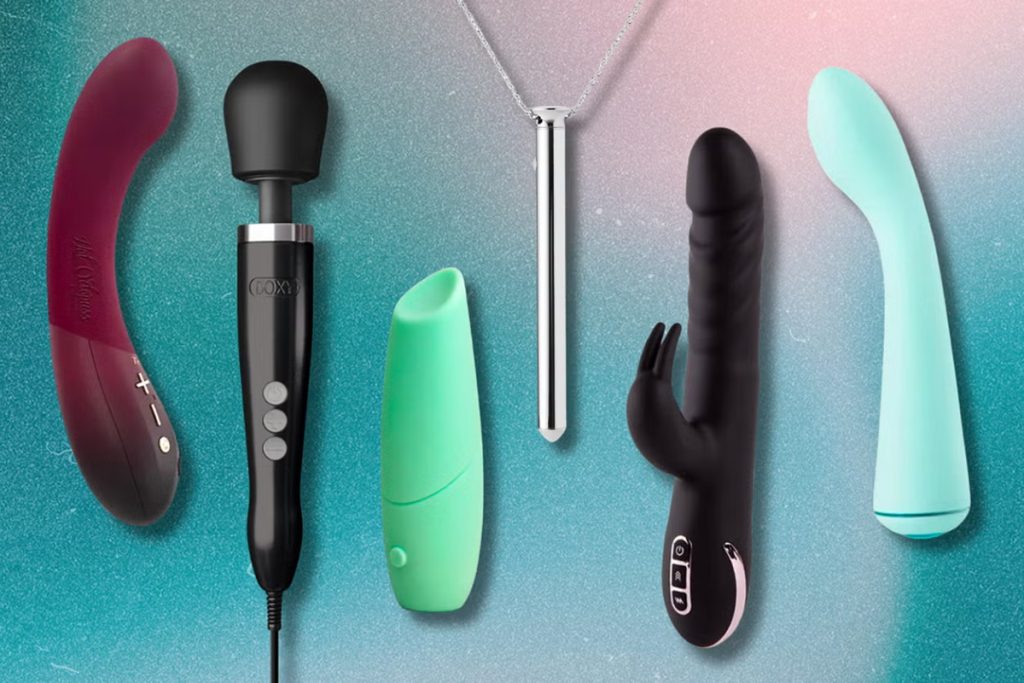
Why 40 Decibels is the Golden Standard for Discretion
Understanding what “quiet” actually means in measurable terms is the first step toward finding truly whisper quiet sex toys for roommates, thin walls, or shared living situations — and the answer starts with a single number: 40 decibels.
40 dB is often considered a benchmark for discreet operation, a threshold established in reference to everyday sounds we already associate with silence. According to the American Academy of Audiology, 40 decibels is roughly equivalent to a quiet library or a hushed whisper across a room. It’s the acoustic equivalent of almost nothing — background-level noise that registers without demanding attention. Manufacturers who hit this target have engineered something genuinely unobtrusive.
To put that in perspective, here’s how 40 dB compares to common household sounds:
- 30 dB — Soft rustling of leaves; near-total silence
- 40 dB — Quiet library, low whisper (the discretion benchmark)
- 50 dB — Rainfall, a moderate conversation, a running refrigerator
- 60 dB — Normal conversation, an office environment
- 70 dB — Vacuum cleaner, loud TV
The 50 dB threshold is where things get critical for shared housing. Sound above 50 dB can often penetrate standard drywall, especially in older construction where insulation is minimal. That 10-decibel gap between 40 and 50 isn’t just a small jump — because decibels are measured on a logarithmic scale, 50 dB is actually perceived as roughly twice as loud as 40 dB.
So when a product claims to be “whisper-quiet,” that phrase carries real engineering weight. When reading manufacturer specs, look specifically for a listed dB rating — not vague language like “ultra-quiet” or “discreet design.” A credible spec will cite a numerical range, often measured at a standard distance of around 12 inches. If no number appears, treat the claim skeptically.
Of course, raw decibel levels don’t tell the whole story. The type of sound a device produces matters just as much as its volume — which is exactly what the next section explores.
Rumble vs. Buzz: The Acoustic Science of Thin Walls
The pitch of your toy matters just as much as its volume — and understanding why is the key to figuring out how to use a vibrator without roommates hearing you.
High-frequency buzz is the real enemy of privacy. When a motor runs fast with small, rapid oscillations, it produces high-pitched sound waves. Those waves are remarkably efficient at cutting through common building materials. Wood studs, drywall, and hollow-core doors actually act as resonators for frequencies in the 2,000–8,000 Hz range — amplifying rather than muffling that characteristic whirring sound. It’s the acoustic equivalent of a whistle carrying across a football field while a bass drum stays contained in the stadium.
Low-frequency “rumbly” vibrations behave in the opposite way. These deeper waves — produced by motors spinning with heavier, slower oscillations — lose energy quickly as they travel through dense materials. As Cosmopolitan notes in its sexual wellness tech coverage, “the frequency of the vibration can be as important as the decibel level; lower, rumbly frequencies are harder to hear through walls than high-pitched buzzing.” A toy that feels powerful and deep is, by design, a toy that stays in the room.
Internal counterweights are the engineering mechanism behind that rumbly quality. By adding a weighted, off-center mass to the motor shaft, manufacturers shift the vibration into lower frequency bands. The result is a broader, more diffuse sensation — and dramatically less acoustic leakage through shared walls.
Suction devices take this principle even further. Rather than mechanical vibration, they use pressure-wave oscillations to stimulate, generating almost no surface-level buzzing at all. In informal noise comparisons, suction toys consistently register lower than traditional vibrators at equivalent intensity settings — making them a standout choice for thin-walled apartments.
The materials and mechanics behind these quieter designs are no accident, which brings us to the specific engineering choices that separate a truly silent motor from everything else.
The Engineering Behind Silent Motors
Modern quiet toy design comes down to one core truth: the less mechanical friction inside a device, the less noise escapes to the outside world.
That principle drives every meaningful innovation in this space, from motor selection to how the casing is assembled. Understanding these upgrades helps explain why some devices whisper while others broadcast — and why the gap between them keeps widening.
- Brushless motor technology sits at the foundation of genuinely quiet design. Traditional brushed motors create noise through constant physical contact between internal components. Brushless motors eliminate that contact entirely, reducing the internal friction that generates the characteristic mechanical “whirring” sound. According to acoustic engineering principles, this design allows for high-intensity vibration output with significantly lower noise signatures — meaning more power doesn’t have to mean more sound.
- Silicone dampening systems act as a mechanical buffer between the motor and the outer casing. In practice, when a motor vibrates, those vibrations travel outward through whatever material surrounds it. Hard plastic casings amplify and project that energy. Silicone dampening layers absorb it instead, interrupting the transmission path before sound can radiate outward. This is why two devices with identical motors can sound completely different depending on how they’re constructed inside.
- Advanced movement mechanics — including flapping mechanisms and telescopic rotation — distribute motion more evenly than simple single-axis vibration. Rather than concentrating repetitive impact in one direction, these systems spread kinetic energy across multiple axes, which lowers the peak acoustic output at any given moment. This is particularly relevant for discreet clitoral suction devices for dorms, where pressure-wave technology replaces direct motor-driven contact altogether, cutting noise at the source.
Retailers that curate specialized collections around these mechanical upgrades aren’t just marketing — they’re filtering for devices where engineering choices were deliberate. Knowing what’s inside a device tells you far more than a vague “whisper-quiet” label ever could. Of course, even the most sophisticated motor can be undermined by how and where you use a device — which is where smart environmental strategies become just as important as the hardware itself.
Strategic Hacks for Using Toys in a Shared Room
Even the quietest motor can betray you if your environment is working against you — but a few simple adjustments can make any toy dramatically more discreet.
- The White Noise Strategy. A fan or humidifier running in the background is one of the most effective tools for masking mechanical hum. The American Academy of Audiology notes that sound levels above 50dB are generally audible through standard drywall, while anything at 40dB or lower tends to blend into ambient background noise. A box fan set to medium can easily generate 45–50dB of consistent, neutral sound that drowns out a toy operating at a similar range — essentially rendering it acoustically invisible.
- Under-the-Covers Insulation. Your bedding is a surprisingly capable sound muffler. A thick duvet or layered blankets absorbs and scatters vibrational frequencies before they can project across the room. Holding a toy against your body and beneath a heavy comforter can reduce perceived sound by several decibels — a meaningful difference in a shared space. This technique works especially well with discreet internal vibrators for shared house privacy, since those devices transmit less surface buzz to begin with.
- Timing and Ambient Noise. Strategic timing is underrated. The 10–15 minutes someone spends in the shower, the end credits of a loud action movie, or the rumble of a dishwasher cycle all create natural acoustic cover. A common pattern is to identify the predictable noise windows in a shared household and plan accordingly — no special equipment required.
- Surface Isolation. Never rest a running vibrator directly on a hard nightstand or wooden floor. Rigid surfaces act as amplifiers, resonating the device’s vibration into the structure of the furniture itself. A folded towel, a pillow, or even a soft-cover book placed underneath breaks that contact point and prevents the surface from broadcasting sound into the room.
Of course, environment management only goes so far. If your toy’s motor is fundamentally noisy, no amount of strategic timing will fully solve the problem — which is why the type of device you choose matters just as much as how you use it.
Choosing Discreet Clitoral Suction and Internal Devices
The right technology choice matters more than volume settings — certain device mechanics are engineered to be quiet by design, not just by accident.
Air-pulse and suction technology is one of the clearest examples. Rather than relying on a spinning motor to generate sensation, air-pulse devices use pressure waves directed through a small nozzle. Because there’s no direct contact oscillation against tissue, the characteristic buzz of a traditional vibrator is largely eliminated. In practice, these devices often register several decibels lower than comparable oscillating toys — making them among the most reliable low noise vibrators on the market today.
Weighted internal vibrators take a different approach to quiet operation. As covered in the engineering section, brushless DC motors and silicone dampening systems isolate vibration at the device head rather than broadcasting it outward. Internal toys benefit especially from this design because surrounding muscle and tissue absorb residual resonance naturally — meaning the sensation stays where it’s intended rather than buzzing through a nightstand or mattress.
Flapping or flickering mechanics for external stimulation deserve attention too. These devices mimic tongue-like movement rather than sustained vibration, which produces a softer, lower-frequency action. The result is tactile stimulation that feels intense without the telltale mechanical hum that cuts through thin walls or shared spaces.
Heating elements represent a quieter bonus feature worth prioritizing. Gentle warming technology adds a layer of physical sensation — improving comfort and arousal — without introducing any additional motor noise. Heat is generated through a passive electrical element, so it contributes zero sound output.
Knowing which mechanics naturally favor discretion narrows your shortlist considerably — and the good news is that superior engineering doesn’t have to mean a premium price tag.
The Value of High-Tech Discretion on a Budget
Advanced acoustic engineering doesn’t have to come with an advanced price tag — getting truly quiet performance is more about smart selection than spending power.
A persistent myth in the wellness space is that 40 decibel sex toys require a premium investment. In practice, the correlation between price and noise performance is weaker than most shoppers assume. The mechanical architecture — brushless motors, silicone dampening, suction-based stimulation — matters far more than the retail sticker price. A well-engineered motor running quietly at 40dB can be housed in a mid-range device just as effectively as an expensive one, provided the manufacturer prioritizes internal acoustics over packaging aesthetics.
Direct-to-consumer models change the math entirely. When brands sell without retail intermediaries, they typically pass 20–45% of that savings directly to the buyer. That margin compression means genuinely advanced mechanics — flapping stimulators, air-pulse suction systems, multi-axis internal movement — become accessible without the luxury markup. Idollri specializes in exactly this category, offering high-performance devices with sophisticated mechanical functions at significant promotional discounts, making clinical-grade quiet a realistic option at everyday price points.
Fan-vetted styles matter more than marketing language. Collections that have accumulated real-world user feedback are invaluable for noise-conscious shoppers — community consensus reveals which devices live up to their “whisper-quiet” claims and which don’t. Looking for curated “Hot Collections” with documented tactile performance means prioritizing stimulation mechanics over cosmetic design trends, which is where the genuinely silent options tend to live.
The takeaway is straightforward: budget thoughtfully, not expensively. Knowing which technical specifications predict quieter operation — and where to find them at honest price points — is the foundation of any smart purchase decision. That knowledge becomes even more actionable when you have a concrete checklist to work from, which is exactly where to go next.

The Bottom Line: Your Privacy Checklist
Choosing a truly quiet vibrator comes down to a handful of specific, verifiable criteria — and knowing exactly what to look for before you buy.
The single most important number to remember is 40dB. Devices rated at or below that threshold operate at library-quiet levels, meaning they produce less ambient noise than a normal conversation. Most consumers never see decibel ratings listed on packaging, which is why researching a product’s technical specs — or relying on community reviews that specifically mention noise levels — matters so much before purchase.
Motor quality is the second pillar of a quiet experience. Low-frequency “rumbly” motors don’t just feel better — they produce deeper sound waves that dissipate quickly rather than traveling through walls and furniture. High-pitched “buzzy” motors do the opposite, sending vibration up into treble frequencies that carry surprisingly far through solid surfaces. Brushless motor technology reduces the mechanical friction that generates that unwanted high-pitched tone, and housings built with medical-grade silicone act as a natural dampening layer, absorbing residual vibration before it becomes audible noise.
Environmental layering adds a secondary line of defense that’s easy to overlook. As Sohimi Sexual Health Education notes, using ambient noise — a fan, white noise machine, or streaming audio — alongside a low-decibel device creates genuine acoustic coverage in shared living situations. A folded blanket or pillow placed around the device provides simple physical insulation without requiring any special equipment.
Finally, smart retail choices make discretion more accessible. Promotional price points often include devices featuring suction mechanics or flapping technology — both of which are engineered to produce less vibration-based noise than traditional motors.
Still have specific questions about noise levels, motor types, or making an existing device quieter? The next section addresses the most common concerns directly.
Frequently Asked Questions About Quiet Vibrators
Choosing a quiet vibrator raises practical questions that go beyond marketing claims — here are straightforward answers to what people actually want to know.
Can my roommates hear my vibrator through the wall?
It depends heavily on the motor type, surface contact, and wall construction. A brushless motor toy running under 45 dB on a soft mattress is unlikely to transmit sound through a standard drywall partition. However, placing any vibrating device directly on a hard surface — like a wooden floor or nightstand — dramatically amplifies sound via structural resonance.
What is the quietest type of sex toy motor?
Brushless motors are among the quietest options available. As noted by Engineering.com, traditional brushed motors create physical friction between components, which generates both heat and acoustic noise. Brushless motors eliminate that mechanical contact entirely, producing a smoother, significantly quieter operation at comparable power levels.
How do I make my existing vibrator quieter?
The most effective approach is surface isolation. Place the toy on a folded blanket or pillow, keep it away from walls and hard furniture, and use lower intensity settings. Holding it firmly against the body also dampens vibration that would otherwise radiate outward.
Is clitoral suction quieter than vibration?
Generally, yes. Suction-style toys often use air pressure pulses rather than mechanical vibration, which means less motor-driven buzz travels through surfaces or into the air. They’re not silent — but a common pattern is that users find them noticeably more discreet in shared living situations.
Are expensive vibrators always quieter?
Not automatically. Price often reflects materials, brand positioning, or added features. What matters is motor engineering and body construction — some mid-range toys outperform premium-priced options on noise. It’s advisable to look for decibel ratings or verified user reviews that specifically address sound level before assuming cost equals quiet.


