

Choosing to gift a vibrator to your partner is one of the most thoughtful—and misunderstood—gestures in modern relationships. Done right, it signals attentiveness, trust, and a genuine investment in shared pleasure. Done wrong, it lands like a punchline. The difference almost always comes down to one thing: design-first thinking.
The intimate wellness industry has quietly shed its novelty-shop reputation, and the devices that lead this shift are built around the body, not around shock value.
The language around these products has changed significantly. What was once labeled an “adult toy” is now increasingly positioned as an intimate wellness device—an object designed with the same ergonomic rigor and material quality you’d expect from a premium skincare tool. This isn’t just marketing reframing. According to The Journal of Sexual Medicine, over 50% of women report that vibrator use makes it easier to reach orgasm—a statistic that reframes the gift from frivolous to genuinely functional. When you understand that, the stakes of choosing well become obvious.
Material quality shapes the first impression before a single button is pressed. Medical-grade silicone, weighted finishes, and considered tactile details communicate care in a way that cheap plastic simply cannot. That sensory first contact—the weight of the device in hand, the softness of its surface—sets the emotional tone of the entire experience. You can explore thoughtfully engineered options here to see what that standard actually looks like.
Gift anxiety is real, particularly for men entering this category for the first time. The fear of misjudging tone or taste often pushes buyers toward safer but less meaningful choices. Here, Cosmopolitan’s research on sexual wellness trends is instructive: discreet, high-end packaging dramatically reduces that anxiety while elevating the unboxing moment into something genuinely memorable.
Getting this gift right ultimately means choosing technology that mimics natural sensation rather than amplifies volume or intensity for its own sake—which raises an important question about what “elegant” actually looks like in practice.

The Anatomy of Elegance: Avoiding the ‘Over-the-Top’ Design Trap
Sophisticated intimate design is about subtraction, not addition — and understanding that principle changes everything about how you shop for a couple adult toy gift.
The most common mistake buyers make is conflating visual complexity with quality. Mass-market products often lean on aggressive mechanical aesthetics: exaggerated proportions, hard plastic casings, and features that look impressive on a shelf but feel clinical — even intimidating — in practice. As Dr. Jess O’Reilly, sexologist and relationship expert, puts it: “The best gifts in the bedroom are those that prioritize the recipient’s anatomy over visual gimmicks or ‘over-the-top’ designs.” That single principle is the clearest filter you have when navigating a crowded market.
Ergonomic contour beats raw size. A common misconception is that larger dimensions signal superior performance, particularly in products designed for female-centric stimulation. In practice, the opposite is frequently true. Thoughtful curvature, balanced weight distribution, and a form factor designed around human anatomy will outperform sheer bulk every time. Designers who prioritize the body’s natural geometry — as explored in industry conversations about what sex toy design actually requires — produce tools that feel intuitive rather than overwhelming.
Material quality is non-negotiable. According to the International Society for Sexual Medicine, medical-grade silicone is the gold standard for high-end intimate products: it’s non-porous, hypoallergenic, and genuinely body-safe. Run your fingers across the surface — luxury silicone has a distinctive silky, matte finish that feels like skin, not cheap plastic. Hard, shiny casings, hollow sounds when tapped, and strong chemical odors are immediate red flags signaling low-grade materials underneath a premium price tag.
Spotting true craftsmanship comes down to a few telling details: seamless construction, whisper-quiet motors, and purposeful simplicity in the control interface. Brands built around design integrity, like JIMMYJANE®, demonstrate that restraint in aesthetics and rigor in engineering are what separate a meaningful gift from a forgettable gimmick.
Once you understand the design principles that define elegance, the next natural question becomes mechanical: how a device stimulates matters just as much as how it looks — and that’s where the real distinctions between modern technologies begin.
Advanced Mechanics: Choosing Between Flapping, Thrusting, and Suction
Understanding the technology inside a device matters just as much as its exterior finish — especially when buying a sex toy for your girlfriend with genuine care and intentionality.
Standard vibration, the most familiar mechanism, delivers motor-driven oscillation at varying speeds. It’s effective, but it’s also a baseline. Advanced mechanical features like flapping and telescopic rotation are engineered to mimic natural human movement, producing sensations that simple buzzing cannot replicate. That distinction isn’t marketing language — it reflects a fundamental difference in how the body responds to rhythmic, directional motion versus uniform tremor.
Mechanical flapping works through a flexible appendage that moves in a wave-like, back-and-forth motion. Rather than vibrating against the body, it creates a stroking sensation more analogous to touch. For many users, this translates to a feeling that’s less fatiguing and more nuanced over extended use — a meaningful upgrade from entry-level devices.
Telescopic rotation and thrusting mechanisms address a different priority: internal stimulation. A thrusting action creates depth and pressure variation that targets the anterior vaginal wall — what’s commonly referred to as the G-spot — with a consistency that manual technique rarely sustains. When paired with rotation, the combined motion can engage multiple sensitive areas simultaneously, making these features particularly well-suited for partners who’ve expressed interest in internal stimulation.
Clitoral suction is perhaps the most significant innovation in intimate technology over the past decade. Using gentle air-pulse pressure rather than direct contact, suction devices create an indirect stimulation that many women describe as more intense and more natural-feeling than traditional vibration. For a significant portion of users, it has genuinely redefined their expectations.
Matching the right technology to your partner’s known preferences — whether she gravitates toward external sensation, internal pressure, or a combination — is ultimately what separates a thoughtful gift from a generic one. That same principle of intentionality extends beyond the device itself to how it arrives in her hands, which is where presentation becomes the next critical factor.
The Unboxing Experience: Presentation and the ‘Lifestyle’ Aesthetic
Packaging isn’t just wrapping — it’s the first emotional signal your gift sends, and it can shape everything that follows.
When figuring out how to choose a vibrator for your partner, most people focus entirely on the device itself and overlook the moment of reveal. That’s a missed opportunity. The unboxing experience sets the emotional tone before the product is even touched. A gift that arrives in a sleek, matte box with magnetic closures and ribbon-wrapped tissue communicates something fundamentally different than one sealed in shrink wrap with explicit imagery on the front.
Lifestyle branding has become the gold standard for a reason. As Cosmopolitan’s coverage of sexual wellness trends notes, top-tier sexual wellness brands have deliberately shifted toward lifestyle packaging that mirrors high-end tech gadgets or fine jewelry — think clean typography, neutral palettes, and minimal imagery. The effect is immediate: the recipient feels like they’ve received a considered luxury gift, not something pulled from a back-shelf display.
Discretion plays an equally important role. Packaging that could sit on a nightstand without announcing its contents removes a layer of potential self-consciousness. When a partner doesn’t have to quickly hide the box, the entire experience becomes more relaxed and open — which is exactly the emotional environment you want to create.
Premium presentation also functions as a nonverbal statement of respect. Thoughtful packaging signals that the giver treated this purchase with the same care they’d apply to jewelry or fine fragrance.
What to look for in the packaging:
- Discreet exterior design — neutral colors, no explicit images, clean branding
- Quality materials — rigid boxes, magnetic closures, or satin-lined interiors
- Cohesive unboxing flow — tissue paper, branded cards, and organized compartments for the device and accessories
Of course, even the most beautifully packaged gift lands best when the timing and conversation around it feel right — which is where the real art of intimate gifting begins.
Assessing Comfort: How to Introduce a New Device into Your Relationship
Introducing one of the best luxury vibrators with elegant design into your relationship is less about the product itself and more about the moment you choose to present it.
Timing shapes everything. Presenting an intimate gift during a stressful period — a difficult work week, a family conflict, or an emotionally charged conversation — can unintentionally create pressure where none is wanted. A relaxed evening, a weekend trip, or a lighthearted moment after a positive shared experience creates the emotional space your partner needs to receive the gesture openly.
Framing matters as much as the gift itself. Rather than positioning a new device as a statement about what’s been missing, approach it as a shared adventure or a wellness upgrade you’re both exploring together. Language like “I thought this could be something fun for us” signals inclusion, not criticism. This reframe shifts the dynamic from gift-giver and recipient to two curious partners experimenting together — a meaningful distinction.
Assessing your partner’s comfort level and interests is the first step in ensuring a sex toy gift is well-received. This means listening for cues beyond words: her curiosity during conversations about intimacy, her openness to trying new things in other areas of life, or even her reaction when the topic arises naturally. Comfort isn’t assumed — it’s observed over time.
Don’t underestimate the practical element. Quality lubricant can significantly improve a first experience with any new device, reducing friction and building confidence for both partners. Pairing the gift with a thoughtful addition like a premium lubricant communicates care and preparation rather than impulsiveness.
Once the emotional groundwork is laid, the physical integrity of the device itself becomes the next critical consideration — and that starts with what it’s actually made of.
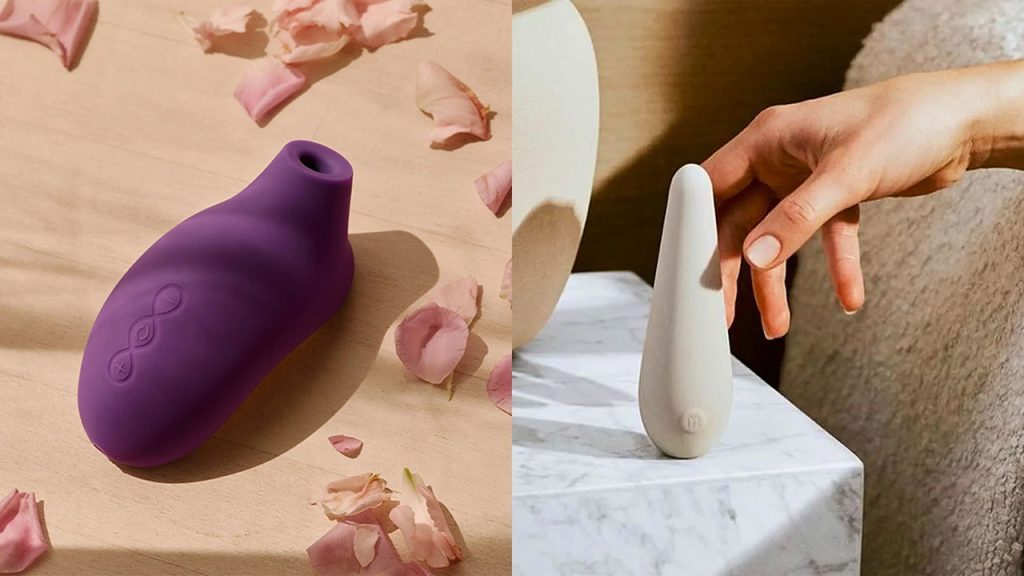
Why Material Science Matters: The Case for Medical-Grade Silicone
Material quality is the single most consequential factor separating a luxury intimate gift from one that looks elegant but fails where it counts most.
Any thoughtful sex toy gift guide 2025 will tell you the same thing: porous materials are a red flag. Jelly rubber and PVC contain microscopic channels that trap bacteria, absorb lubricants, and off-gas chemical compounds — even after cleaning. These materials can’t be fully sanitized, meaning they degrade in both hygiene and structural integrity over time. For a gift meant to communicate care and consideration, presenting something made from porous materials sends entirely the wrong message, regardless of how refined the packaging looks.
Medical-grade silicone, by contrast, is non-porous, body-safe, and durable enough to last for years with minimal maintenance. According to the International Society for Sexual Medicine (ISSM), premium silicone warms to body temperature quickly and offers a silky skin-feel that actively prevents irritation — a sensory quality that cheaper alternatives simply can’t replicate. That thermal adaptation isn’t a minor detail; it’s a meaningful part of the sensory experience, reducing the initial shock of contact and creating a more intuitive, natural feel.
Longevity matters in a luxury context. A well-made silicone device, properly cleaned and stored, can remain in excellent condition for several years. That durability transforms the gift from a consumable into something closer to an investment — one that genuinely rewards the thought behind it.
Hypoallergenic properties round out the case. Skin sensitivities are common, and intimate areas are particularly vulnerable to reactions. Medical-grade silicone is inherently hypoallergenic, making it the responsible default for any gift in this category. When comfort and safety are non-negotiable, material science stops being a technical footnote and becomes the foundation of the entire gift decision — a point that connects naturally to how couples, specifically, can benefit from devices built with the same standards in mind.
Enhancing Shared Intimacy: Devices Designed for Couples
The most sophisticated intimate gifts don’t just benefit one partner — they’re engineered to strengthen the connection between two people.
Remote-control capability has quietly become one of the most sought-after features in couple-oriented devices. Whether partners are separated by distance or simply exploring power-play dynamics in the same room, app-connected technology allows one partner to control the other’s experience in real time. The emotional resonance of this — the trust, the anticipation, the shared focus — adds a relational dimension that a purely solo device simply cannot replicate.
Wearable design takes that shared dimension further. As The Knot’s expert guidance notes, couple-focused vibrators are specifically designed to be ergonomic enough to fit between partners during shared intimacy — meaning both people benefit simultaneously. This isn’t incidental; it reflects intentional engineering. The curved, low-profile silhouette of a well-designed wearable accounts for real anatomical geometry, allowing natural movement without interruption. When a device is shaped around how bodies actually interact, it stops feeling like an add-on and starts feeling like a natural extension of the experience itself.
Flapping and mechanical movement technology integrates naturally into foreplay, too. Unlike simple vibration — which can feel one-note over time — layered mechanical motion sustains novelty and heightens sensation across longer, more exploratory sessions. This makes the device genuinely useful at multiple stages of intimacy, not just a singular-purpose tool.
The ROI here is worth naming plainly. A well-chosen device at the $100–$200 price point can contribute meaningfully to relationship satisfaction over months or years — a fraction of the cost of a single couples’ therapy session, and a far more enjoyable investment. When you consider the criteria that actually matter — material, mechanics, ergonomics, and shared usability — the checklist for choosing the right gift becomes clearer than it might initially seem.
The Bottom Line: Your Intimate Gift Checklist
Choosing a vibrator for your partner becomes effortless when you filter every decision through five clear criteria — material, mechanics, packaging, shape, and presentation.
The right intimate gift checks every one of these boxes, not just one or two. Think of this checklist as a quality filter: each criterion eliminates a category of products that look appealing on a shelf but underdeliver in ways that matter.
- Medical-grade silicone first. As covered earlier, material is the foundation of everything. Silicone is body-safe, non-porous, temperature-responsive, and built to last. If a product page doesn’t explicitly state “medical-grade silicone,” move on.
- Mechanical movement over simple vibration. Flapping and thrusting mechanisms engage anatomy in fundamentally different ways than a standard buzzing motor. This distinction separates devices designed with female physiology in mind from those that simply borrowed hardware from an older template.
- Lifestyle-level packaging. A gift signals intention before it’s even opened. Packaging that mirrors high-end electronics — matte finishes, magnetic closures, minimal branding — communicates respect and thoughtfulness. It transforms the moment of giving from awkward to memorable.
- Ergonomic shapes that respect female anatomy. Design experts like Ethan Imboden have long argued that intimate products should work with the body’s natural curves. As Dr. Jess O’Reilly notes, sophisticated design focuses on ergonomic shapes that mimic natural touch rather than intimidating, oversized aesthetics.
- Low-pressure, romantic presentation. The setting shapes how the gift lands emotionally. A quiet evening, genuine framing around her pleasure, and zero performance pressure transforms a product into an act of care.
In practice, most products satisfy one or two of these criteria. The rare ones that satisfy all five are the gifts worth giving — and the ones worth talking about. The questions that come up most often about intimate gifting, from sizing anxiety to relationship dynamics, deserve their own honest conversation.
Common Questions About Gifting Intimate Wellness
Gifting a vibrator thoughtfully means anticipating your partner’s questions — and your own — before the moment arrives.
The most important rule: when in doubt, go smaller and less intense.
Most wellness devices designed for couples offer adjustable settings, which means a compact, beginner-friendly form factor is far more versatile than assuming size equals quality. A smaller silicone design can be upgraded later; a poorly sized first gift is harder to walk back.
- Start with external stimulators. They sidestep size concerns entirely and are statistically the more effective route — research published in The Journal of Sexual Medicine confirms that for many women, vibration is a physiological necessity for climax, not merely a preference. External design honors that reality.
- For new relationships, timing matters more than the gift itself. A vibrator is appropriate once you’ve established open, comfortable dialogue about physical intimacy. Framing it as an exploration rather than a statement removes pressure from both sides.
- When explaining your intent, lead with her pleasure explicitly. Say: “I bought this because I want you to feel good — full stop.” Avoid language that implies you expect to be involved. The gift should feel autonomous, not performative.
- On the “am I not enough?” concern: this is the question partners worry about most, and it dissolves fastest with direct communication. A device doesn’t replace intimacy — it expands it. Framing the gift as an addition to your shared experience, not a critique of it, recontextualizes everything.
In practice, the most successful intimate gifts come wrapped in honest conversation. The object matters; the context around it matters more. Choosing a vibrator for your partner with care, intention, and emotional awareness transforms a potentially awkward moment into a genuine act of connection.


