

The full history of vibrators is far stranger — and more revealing — than most people realize, stretching back to a medical establishment that pathologized women’s bodies as a matter of routine.
In the 19th century, physicians routinely diagnosed women with “female hysteria” — a sweeping, catch-all condition used to explain everything from anxiety and irritability to fainting and perceived disobedience. As documented in Rachel Maines’ book The Technology of Orgasm, the vibrator was originally patented as a medical instrument specifically designed to treat this condition, placing one of today’s most personal devices squarely inside the doctor’s office.
The treatment itself was known as “pelvic massage” — physician-administered manual stimulation intended to produce what medical literature of the time called “hysterical paroxysm.” Patient agency was essentially nonexistent. Women were positioned as passive recipients of a medical procedure, their own pleasure reframed as a clinical outcome. This erasure of autonomy was not incidental; it was structural.
The devices evolved alongside industrial technology. Early iterations were steam-powered, cumbersome machines found only in clinical settings. By the late 1800s, the advent of electromechanical engineering allowed for smaller, more practical devices — a shift that would soon move them out of the physician’s office entirely. Research noted in PMC via the NIH confirms that vibration-based devices have a documented connection to pelvic health that predates modern sexual wellness culture by well over a century.
Understanding this clinical origin matters. It reframes the modern vibrator not as a fringe product but as a tool with a long — if complicated — institutional history. That history took a dramatic turn in the early 20th century, when these devices left the clinic and landed, surprisingly, in the pages of household catalogs.
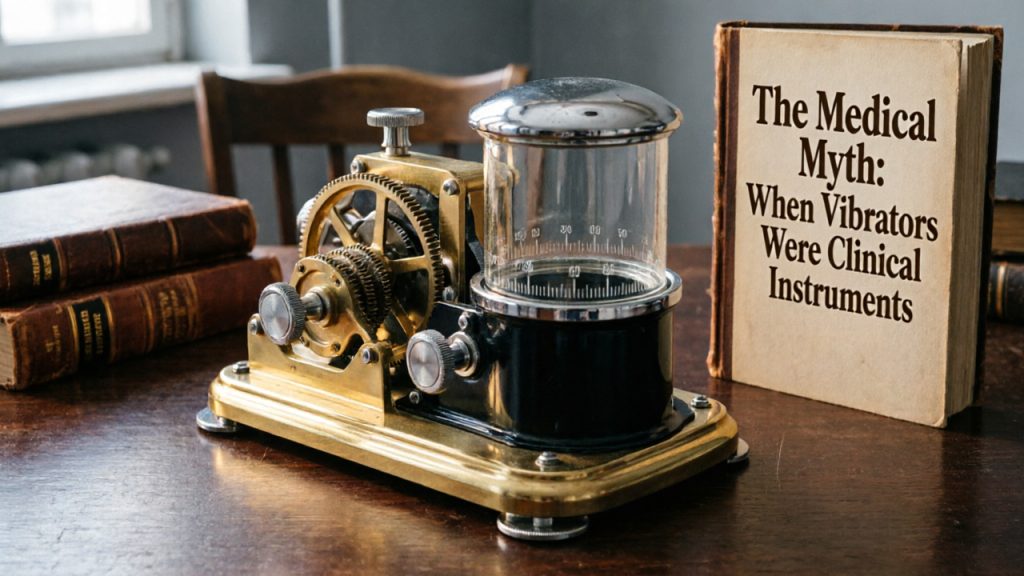
The Quackery Era: From Doctor’s Office to Home Appliances
Before vibrators carried any cultural taboo, they sat comfortably in mainstream catalogs — right next to sewing machines and electric fans — sold as wholesome household health gadgets.
As scholars have noted, vibrators had a long history as medical quackery before they were ever rebranded as sex toys, according to historical analysis from The Conversation. Once the device left the doctor’s office, manufacturers rushed to capitalize on its perceived health benefits — and they did so with remarkable boldness.
Early vibrator marketing positioned the device as a universal cure, not a pleasure product. Turn-of-the-century advertisements made claims that today read as almost comical in their ambition:
- “Relieves headaches, neuralgia, and nervous fatigue within minutes”
- “Restores circulation and tones the entire body”
- “The ideal gift for the home — as essential as the kitchen stove”
- “Recommended by physicians for all-over health and vitality”
- “Soothes away muscular tension after a hard day’s work”
“The vibrator appeared in respectable women’s magazines like Harper’s Bazaar and McClure’s — marketed not as a luxury, but as a household necessity for modern living.”
The key to its mainstream success was strategic ambiguity. Manufacturers never named the device’s more intimate applications directly. Instead, they leaned into vague wellness language — “invigorating,” “stimulating,” “revitalizing” — that appealed broadly without raising censors’ eyebrows.
By the 1920s, however, as film and popular media began depicting vibrators in more explicitly sexual contexts, that careful ambiguity collapsed. Retailers quietly pulled catalog listings. The devices migrated from respectable department stores into back-room novelty shops, beginning a decades-long exile from polite society. The same item that once sat alongside toasters became underground merchandise almost overnight — a cultural reversal that would eventually fuel the reclamation movements that helped define modern sexual wellness. That reclamation, driven by feminism and a new generation of pleasure-forward boutiques, would reshape the conversation entirely.
The Feminist Reclamation: Pleasure as a Political Act
The vibrator’s transformation from clinical curiosity into a symbol of female empowerment is one of the 20th century’s most overlooked cultural shifts. By the late 1960s, the device had broken free from the doctor’s office — and the women’s movement had everything to do with it.
The single most pivotal moment in that journey arrived in 1968 with the debut of the Magic Wand, a massager marketed for muscle relief that quickly became something far more significant. Women recognized what the medical establishment had long obscured: that pleasure belonged to them, not to a physician’s prescription pad. The Magic Wand didn’t just sell well — it reframed the entire conversation around female sexuality.
Second-wave feminism provided the ideological fuel for that reframing. Activists and writers of the era argued that reclaiming bodily autonomy — including sexual pleasure — was inseparable from broader political liberation. Pleasure wasn’t frivolous; it was a form of resistance. The vibrator, once sanitized by clinical framing, became a tangible expression of that argument. Women weren’t patients managing a mysterious “condition.” They were individuals with legitimate desires that deserved honest acknowledgment.
Boutique retailers played a quietly revolutionary role in making that acknowledgment accessible. Shops designed specifically with women in mind — staffed by knowledgeable people, free of the intimidation typical of adult stores — created the first genuinely safe spaces for female-centric exploration. Purchasing a self care toy stopped being a shameful errand and became an act of informed self-determination. The retail environment itself sent a message: your curiosity is valid.
That cultural repositioning — from medicalized tool to empowerment object — laid the groundwork for something even broader. As the 21st century approached, a new vocabulary was emerging around wellness, self-care, and holistic health that would absorb the vibrator entirely, moving it from the margins of polite conversation to the center of it.
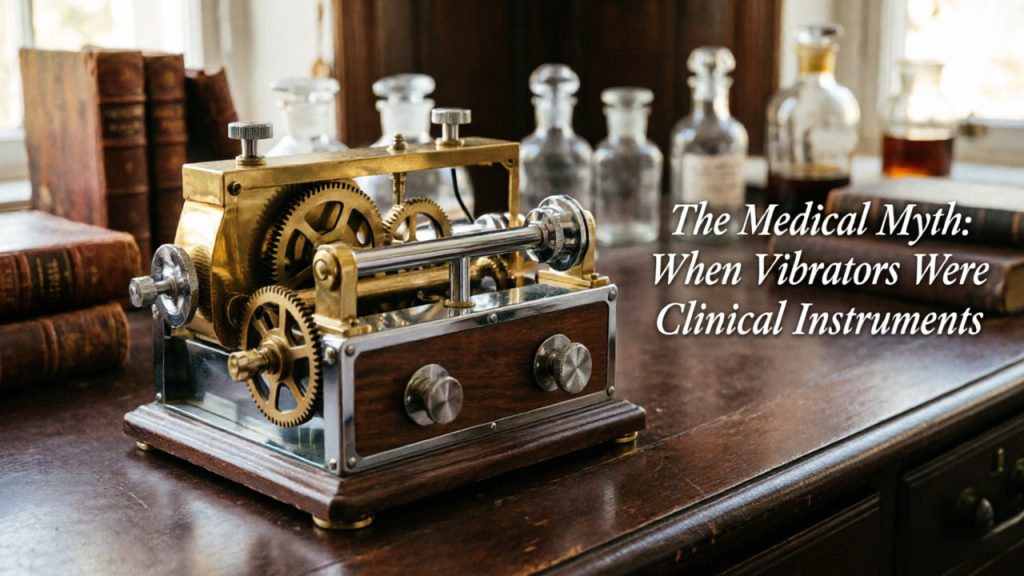
The Wellness Pivot: Redefining the ‘Self-Care Toy’
Sexual wellness is no longer a niche conversation whispered behind closed doors — it’s a mainstream pillar of modern self-care, sitting alongside meditation apps and vitamin routines.
Old Taboo vs. Modern Wellness
This shift has been dramatic. A decade ago, adult products lived in unmarked packaging, hidden in plain sight. Today, sleek, minimalist vibrators appear in wellness editorials, lifestyle gift guides, and even pharmacy shelves. The contrast tells the whole story:
- Old taboo: Products sold under euphemisms, shrouded in discretion, marketed to no one in particular
- New wellness: Products positioned alongside serums, fitness trackers, and sleep aids as tools for whole-body health
The ‘Self-Care’ Rebrand
High-end lifestyle branding deserves significant credit for normalizing the conversation. When adult products are packaged like premium skincare — matte finishes, clinical language, sustainable materials — they signal something important: this is a legitimate health category, not a guilty pleasure. Brands leaning into biomimetic technology, which mimics natural human touch for more intuitive stimulation, have amplified this shift by framing innovation as a wellness differentiator rather than a novelty.
Sexual Health as a Fundamental Right
The normalization isn’t just cosmeticultural — it’s institutional. As the World Health Organization defines it, “sexual health is a state of physical, emotional, mental and social well-being in relation to sexuality; it is not merely the absence of disease.” That framing matters enormously. It moves sexual wellness out of the shadows and into the same conversation as cardiovascular health or mental fitness.
Research published via NIH further supports vibrator use as clinically relevant for pelvic health outcomes — reinforcing that these tools belong in a holistic wellness routine.
As innovations continue to close the gap between technology and human sensation, the next evolution in this space goes far deeper than vibration alone.
Biomimetic Innovation: The New Frontier of Stimulation
Modern vibrators have moved far beyond simple buzzing motors — today’s premium devices replicate the nuance of human touch through sophisticated mechanical engineering.
As covered in earlier sections, the wellness reframing of sexual self-care has created serious consumer demand for devices that actually deliver. That demand has pushed manufacturers into genuinely novel territory. According to Forbes Health, modern vibrators have evolved from basic vibration into biomimetic technology — devices engineered to mimic the mechanics of human touch rather than simply approximate it. This shift is as meaningful to the female empowerment history of these products as any cultural milestone that came before it.
Biomimetic design is the clearest signal yet that the industry is treating pleasure as a science, not an afterthought. Where early electric devices offered a single, undifferentiated sensation, today’s premium category centers on three distinct mechanical innovations:
- Mechanical flapping: Flexible components oscillate in a rhythmic, wave-like motion that mirrors the variability of manual stimulation, offering layered sensation rather than constant pressure.
- Air-pulse suction: Precision air-pressure chambers create targeted, contactless stimulation — replicating a sensation that rigid motors simply cannot produce.
- Telescopic thrusting with heating elements: Motorized extension mechanics provide a dynamic range of motion, while embedded heating components bring surface temperature to body-warmth levels, reducing the clinical feel of earlier devices.
Each feature addresses a specific gap that simpler technology left open. Heating elements, for instance, aren’t a gimmick — thermal comfort directly affects muscle relaxation and arousal response. Telescopic rotation adds a dimension of movement that static devices cannot replicate.
Together, these mechanics make personalization genuinely possible. Users can layer sensations, adjust intensity, and engage different features independently — which is precisely what a personalized wellness tool should do. That level of engineering investment signals something broader about where this market is headed, a story the numbers tell with striking clarity.
The Economic Impact of the Pleasure Revolution
The sexual wellness industry has quietly become one of the most powerful growth stories in consumer health — and the numbers make that impossible to ignore. The global sexual wellness market is projected to reach approximately $125.1 billion by 2033, according to Precedence Research, signaling that the cultural shift toward treating sexual health as wellness isn’t a passing trend. It’s a structural market transformation.
Consumer demand is now the primary engine of industry R&D. Shoppers are arriving informed, asking pointed questions about motor quality, material safety, and stimulation mechanics. That pressure has pushed brands to invest heavily in engineering — funding research into whisper-quiet motors, body-safe silicone composites, and the biomimetic technologies covered in the previous section. The result is a product category that has evolved more in the past decade than in the preceding century.
Premiumization is perhaps the most telling indicator of where the market is heading. Consumers are increasingly willing to pay more for devices that perform better, last longer, and feel intentional rather than disposable. This mirrors patterns seen in adjacent wellness categories — think premium skincare or ergonomic fitness equipment — where buyers trade up once they understand the difference quality mechanics make. A well-engineered device isn’t a luxury; it’s a long-term investment in physical and emotional well-being.
Alongside premiumization, the direct-to-consumer model has dismantled old barriers to access. Brands now reach buyers through discreet online storefronts, skipping the uncomfortable retail experience entirely. That accessibility has broadened the audience significantly, drawing in demographics that might never have walked into a specialty store. As Your Health Magazine notes, this normalization is reshaping how people perceive and prioritize intimate self-care — a shift that sets the stage for exploring how technology is deepening that connection even further.
Beyond the Buzz: How Technology Enhances Intimacy
Modern stimulation technology does far more than deliver physical sensation — it actively dismantles barriers to intimacy, supports mental health, and is reshaping what “self-care” truly means.
Remote connectivity has transformed long-distance relationships in ways that were unthinkable a decade ago. App-enabled and remote-control devices now allow partners separated by miles — or continents — to share intimate moments in real time. What was once a purely solitary experience has become a channel for emotional closeness, helping couples maintain connection across physical distance. This isn’t novelty technology; it’s a meaningful evolution in how people sustain relationships.
Advanced stimulation also plays a quieter, equally important role for people navigating physical barriers to pleasure — including hormonal changes, pelvic floor dysfunction, postpartum recovery, and the effects of certain medications. As noted in research published by PMC/NIH, vibrators have demonstrable clinical benefits for pelvic health, supporting function and reducing discomfort in ways that directly improve quality of life.
The psychological benefits are just as compelling. Sexual pleasure products are now viewed as essential components of a holistic health routine, comparable to fitness trackers in their contribution to daily well-being. Regular intentional self-care — including sexual wellness — is consistently linked to reduced cortisol levels, lower anxiety, and improved sleep quality.
The core benefits technology unlocks include:
- Stress reduction through endorphin release and nervous system regulation
- Physical rehabilitation for those managing pelvic pain or post-surgical recovery
- Emotional connection for couples using app-enabled devices across distances
Looking ahead, “smart” wellness devices embedded with biofeedback sensors and AI-driven personalization are already in development — pointing toward a future where intimacy technology adapts in real time to the user’s body and needs. That convergence of health science and personal autonomy is worth examining closely, which is exactly where this story lands next.
The Bottom Line: What You Need to Know
The vibrator’s journey from physician-controlled medical instrument to everyday self-care staple is one of the most significant cultural pivots in the history of women’s health.
The reclamation of sexual pleasure as a personal right — not a medical privilege — marks a genuine milestone in bodily autonomy. As BBC Future has documented, the transition from medical tool to personal wellness device represents a massive cultural shift in individual autonomy, one that continues to reshape how society understands female pleasure and health on its own terms.
- Vibrators have moved entirely out of the clinic and into self-care routines. What once required a physician’s sign-off is now a mainstream wellness purchase, accessible and normalized across demographics.
- Modern technology delivers a fundamentally different experience. Biomimetic flapping mechanisms and precision suction technology replicate natural sensations in ways early electric motors simply couldn’t approach, making personalization the new standard.
- Sexual wellness is now a recognized pillar of whole-body health. Research published via NIH’s PMC and wellness experts like Dr. Bat Sheva Marcus consistently link regular sexual activity and self-exploration to reduced stress, better sleep, and improved pelvic floor health.
- Female empowerment drove the transformation. Consumer demand — not medical gatekeeping — dictated the evolution of this category, and that shift in power is permanent.
The story of the modern vibrator isn’t just about technology improving; it’s about cultural permission expanding. Understanding where these devices came from, how they work, and why they matter makes you a far more informed consumer. If you still have questions about the science, the terminology, or how to choose the right device for your needs, the answers are closer than you think.
Frequently Asked Questions About Sexual Wellness Tech
Sexual wellness technology has a surprisingly deep history and a rapidly evolving future — and most readers still have real questions about both.
Why were vibrators originally considered medical devices?
Early devices were framed entirely within a clinical context. Dr. Joseph Mortimer Granville invented the first electromechanical vibrator in the 1880s as a tool for treating neuromuscular conditions — not for pleasure. Physicians controlled access and usage, which gave the technology an air of legitimate medicine rather than personal wellness.
What is biomimetic technology in adult wellness?
Biomimetic design means engineering a device to replicate natural biological movement or sensation — think pressure patterns that mirror real touch rather than simple mechanical buzz. In practice, this translates to air-pulse technology, wave motion, and adaptive feedback systems that respond to body temperature or applied pressure. The goal is a sensory experience that feels intuitive, not mechanical.
How has the perception of self-care toys changed over time?
This shift has been dramatic and relatively recent. As research into pelvic health and sexual function entered mainstream medical conversation, the stigma surrounding personal stimulators eroded. Today, retailers stock these products alongside skincare and sleep aids — a placement that signals genuine wellness category status rather than taboo novelty.
What should I look for in a modern high-tech stimulator?
Prioritize three things: body-safe materials (medical-grade silicone is the gold standard), intuitive controls that don’t require a manual to operate under pressure, and technology that matches your specific need — whether that’s targeted clitoral stimulation, internal pressure wave technology, or dual-action design. Experts consistently recommend treating this purchase with the same informed attention you’d give any other wellness investment.


